This course delivers the full requirements of DEFRA Module 1 – Water & Flood Awareness, together with Annex G, intended for staff who may work near water and may need to self-rescue, but are not responsible for performing rescue operations on others.
In the 2019 Flood Rescue Concept of Operations this training was covered in Annex H, in the 2025 version of the Flood Rescue Concept of Operations this is covered in the Annex G.
Who it’s for
- Staff working in environments near water, flood scenarios or watercourses, where there is risk of water entry and potential for needing self-rescue.
- Those who do not perform rescues of other people, but must be able to safely manage themselves in shallow or moving water situations.
- Suitable for non-emergency services personnel with duties near water: e.g. ecology, infrastructure, utilities, maintenance, flood response, environmental agencies.
What you’ll learn
The course covers both theoretical and practical elements. Key content includes:
| Theory / Classroom | Practical / Skills |
|---|---|
| • Generic open-water and flood-related hazards | • Movement in shallow water |
| • The effects of cold water on the body (cold shock, immersion effects) | • Self-rescue techniques (how to recover if you enter the water unexpectedly) |
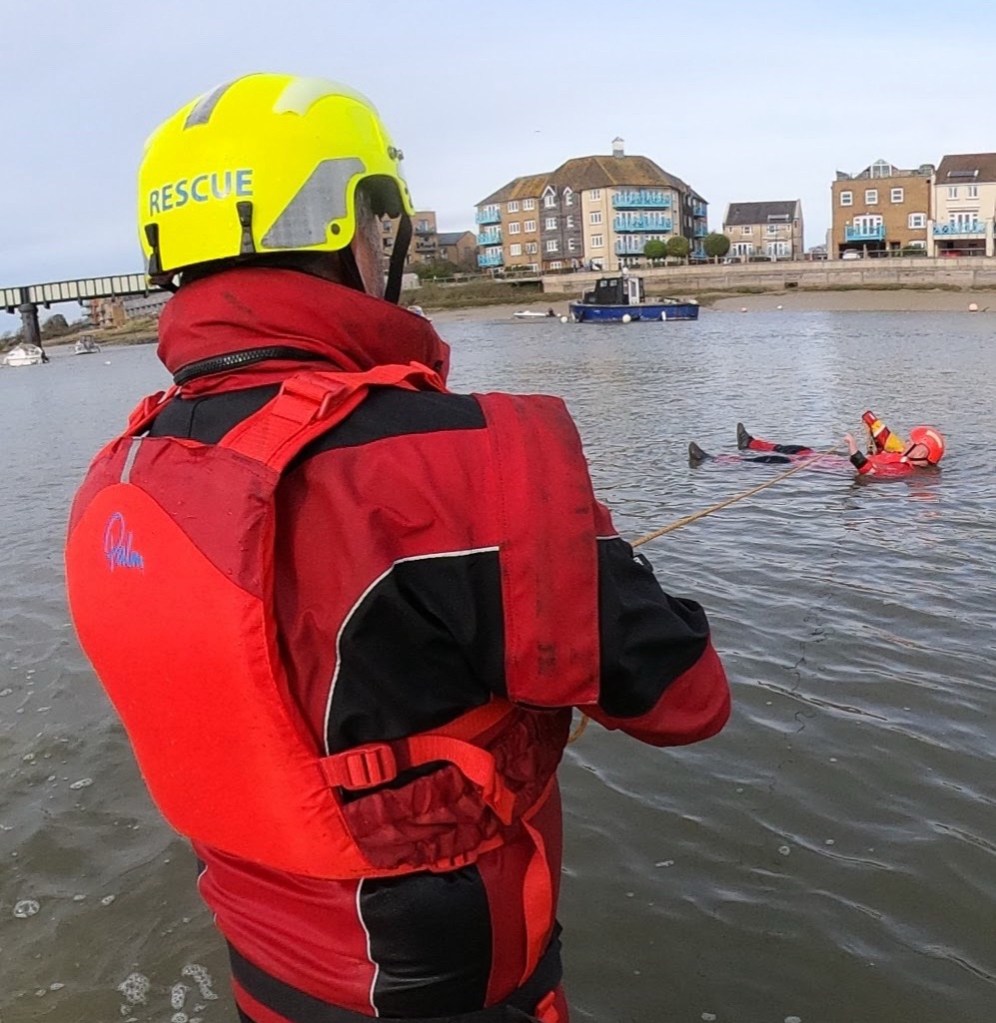
| • Use of personal protective equipment (PPE) and aquatic clothing | • Use of throw bags and other land-based rescue/aid tools |
| • Land-based rescue techniques (shout, reach, throw) and understanding their limitations | |
| • Principles of water safety and prioritised approach to rescue attempts | |
| • Understanding moving water, water flow, underwater obstructions, unstable banks etc. |
Course outcomes
After completing the course, delegates will:
- Be able to recognise and assess hazards associated with water, flooding, and water movement.
- Understand their own limitations and responsibilities when working near water.
- Know how to use the appropriate PPE and aquatic clothing.
- Be confident in basic land-based rescue methods (without entering the water for rescue).
- Be able to self-rescue and move safely in shallow or moving water.
- Be able to use tools like throw bags for emergency aid from the shore.
Course details
- Duration: 1 day (incorporating both theory and practical sessions)
- Prerequisites: None required; suitable for beginners. Must be physically capable of walking on uneven/slippery surfaces; able to throw a throw bag.
- Validity: Certification is valid for a three years with regular refreshers recommended.
- Assessment: Practical demonstration (moving in shallow water, self-rescue, throw bag use), plus theory/knowledge checks.
Why this course matters
Working near water carries inherent risks, including sudden immersion, cold shock, unstable ground, fast moving water, and flood-related hazards. This module ensures that those who are not rescuers but whose roles place them near water are prepared to protect themselves and reduce risks, both for themselves and the wider team.


 Square Knot